0794-4281368

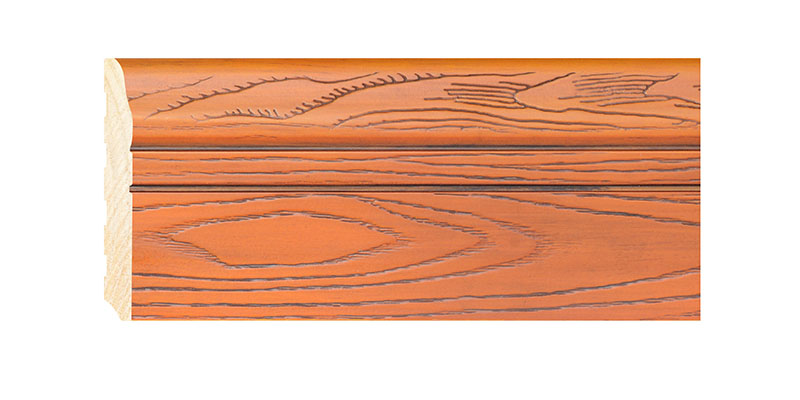
With the development of society, people's requirements for buildings are increasingly deepening. The aesthetic and beautiful appearance of building facades is the design pursuit of architects. How to simply decorate and change the shape through decorative lines, making it look brand new. This is inseparable from decorative lines and their decorative products. So, next, the editor will introduce the installation of decorative lines and the types of decorative lines.
Installation of decorative lines
The construction tools for decorative lines include saw blades, hand saws, tape measures, angle gauges, wire brushes, hammers, steel nails, and so on. Be prepared before construction. Before construction, it is necessary to check whether the wall surface is flat, and ensure that there are no protrusions or foreign objects on the surface. For some concave areas, they need to be filled. Ensure that the error of the plane does not exceed 5 millimeters.
The installation of wall lines is generally done with cement mortar, and the mortar used for construction is specialized bonding mortar and surface polymer anti cracking mortar. It is best to mix manually, with less water and a ratio of water to mortar of around 1:5. To change from adding water to mixing, it is necessary to mix the mortar evenly and moderately during this process. This is more conducive to adhesion and reduces detachment. When pasting, try to apply the cement mortar in place as much as possible, but apply it thinly, and then squeeze it hard for the best effect. For some larger objects, temporary reinforcement and support are needed.
Installation is a meticulous task, and the gaps during installation also affect aesthetics. Generally, it should be kept at around 3 millimeters. If it is not larger than 3 millimeters, it should be sanded with sandpaper on the second day. If the gap is too large, it should be filled to ensure an error of no more than 1 millimeter.
In addition to seams, there are various other points to pay attention to. For example, when pasting wall lines on some circular columns, special attention should be paid to the width of the wall lines, as well as the upper and lower flat lines. For some rectangular columns, it is necessary to consider not having cracks, and the quality is mainly concentrated at a 45 degree angle to prevent detachment.
In some areas such as doors or window sills, it is strictly prohibited to have joints in marble lines. It is necessary to ensure that the inside and outside are consistent and maintain a beautiful appearance. Before installation, it is necessary to lay a foundation so that the gaps are not obvious. There are also some unique and bold interior designs that utilize the wall lines of the exterior walls. When using the exterior wall lines indoors, it is important to pay attention to the details during construction, avoid making holes or digging walls, and maintain the cleanliness of the wall surface.
Types of decorative lines
1. Imitation marble lines
The raw material of the popular imitation marble lines on the market is nano stone powder, which has the texture of stone, is hard, not easily deformed, easy to install, and the surface texture is made by water transfer printing technology, clear and natural, with a variety of styles. Mainly used for TV background wall, elevator door frame, waistline, skirting board, closing line, etc.
2. Solid wood lines
The wood lines are made of hard, fine, wear-resistant, corrosion-resistant, non splitting, smooth cut surface, good processing properties, good paint coloring, good adhesion, and strong nail force wood. After drying treatment, they are processed by mechanical or manual means. The lines are beautiful and smooth, the wood grain is clear and beautiful, the surface is flawless, and it does not deform or peel after use. It is durable and is an environmentally friendly material.
3. Stainless steel wire
Stainless steel decorative lines are cold pressed into one, with strict selection of perfect combinations, elegant shapes, gorgeous and exquisite appearances. The product structure is solid, durable, not easy to scale, not easy to rust, easy to clean, and is a one-time investment.
4. PS lines
The raw material of PS lines is polystyrene, which has light weight, impact resistance, high strength, excellent water resistance, and good toughness. It can be recycled and reused, and is environmentally friendly. PS lines are also commonly used in the production of photo frames, picture frames, and mirror frames, with low cost and diverse styles, and are very popular among consumers.
5. PVC line
PVC decorative lines have the characteristics of lightweight, thermal insulation, heat preservation, moisture resistance, flame retardancy, and easy construction. It has various specifications, colors and patterns, is highly decorative, has good stability and dielectric property, is durable, anti-aging, easy to fuse and bond, and has a wide range of decorative applications.
6. GRC lines
GRC decorative line is a fiber cement composite material reinforced with alkali resistant glass fiber and based on cement mortar. It is a lightweight, high-strength, high toughness, and multifunctional new inorganic composite material made through production processes such as spraying, mold casting, extrusion, and slurry flow. It is commonly used outdoors.
7. Stone lines
Stone lines are made of natural stone and used in indoor and outdoor buildings. Common stone lines include marble lines, granite lines, and sandstone lines, which have good decorative effects but are relatively expensive and difficult to maintain.